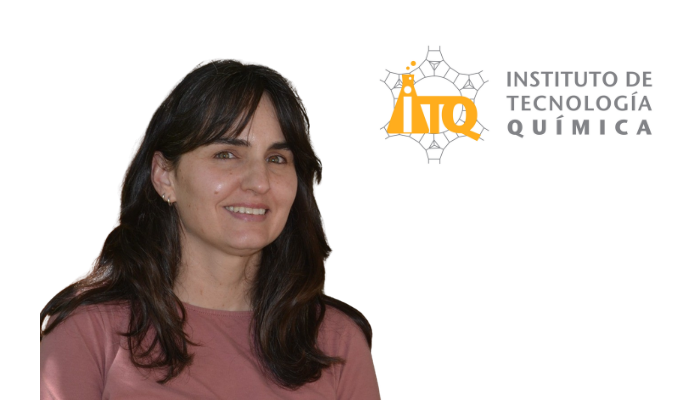
Sara Goberna is a Ramón y Cajal researcher at the Instituto de Tecnología Química (ITQ, CSIC‑UPV), with expertise in molecular inorganic chemistry, nanomaterials and electrochemical energy conversion. She holds a PhD in Nanoscience and Nanotechnology and has over six years of international postdoctoral experience in the United States and France. Her work spans atomically defined catalysts, nanoclusters, single‑atom materials and 2D supports applied to electrochemical processes, combining synthesis with advanced characterization methods such as XAS, SAXS and electron microscopy.
Within REDHy, she leads Work Package 2, coordinating a multidisciplinary team dedicated to the design, synthesis and characterization of redox mediators. Her role includes steering scientific direction, integrating results, preparing reports and facilitating collaboration across synthesis, characterization and theoretical groups, while contributing her expertise in electrochemical evaluation of mediator performance
What was your original motivation to become a researcher/project manager?
When I was a kid, I was fascinated by archaeology. During my chemistry degree at the University of Valencia, I had the chance to work on my final project in the analytical chemistry department, studying Maya Blue–like complexes (a pigment developed by pre‑Columbian Mesoamerican cultures) using electroanalytical methods. That experience sparked my interest in electrochemistry and nanostructured materials, and in understanding how their behaviour is governed at the atomic scale. Over time, this curiosity grew into a strong motivation to develop materials and processes that can contribute to sustainable energy technologies.
What is your (main) research area today?
My current research focuses on developing atomically defined catalysts and advanced 2D materials, together with redox‑active molecular systems that enable efficient electrochemical energy‑conversion processes. I combine design, synthesis, and in‑depth (electrochemical) characterization to understand structure–function relationships, ultimately improving key reactions such as CO₂ and N₂ reduction, water splitting, and related sustainable energy technologies.
What is the main focus of your team in REDHy?
Our team develops and characterizes the redox mediator systems at the core of the REDHy concept, ensuring high reversibility, stability, and compatibility with the electrochemical cell. We study their electrochemical behaviour, optimise synthetic conditions and scale up, and support the integration of mediators with electrodes, membranes, and catalytic reactors to enable efficient and safe decoupled hydrogen/oxygen production.
Could you describe your favourite moment/satisfaction when working for the project and – more in general – for your organisation?
One of the most satisfying aspects of working on REDHy is seeing how contributions from very different disciplines gradually converge into a shared understanding. Compared to the beginning of the project, we now ‘speak the same language’, which makes collaboration far more fluid and rewarding. I particularly enjoy watching how fundamental insights from synthesis and electrochemical characterization translate into design decisions for the emerging REDHy system.
How do you expect REDHy results will affect your organisation and the energy storage sector?
REDHy can position ITQ‑UPV at the forefront of next‑generation electrolyser technologies by contributing unique expertise in materials and electrochemical innovation. For the broader energy sector, the project may enable safer, lower‑cost, CRM‑free, and more flexible hydrogen production—facilitating large‑scale integration of renewables and accelerating the transition toward sustainable energy systems.