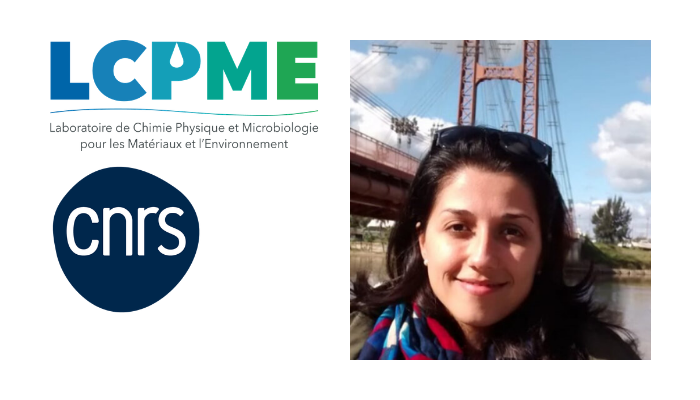
Mariela is a Research Engineer at LCPME. She obtained her PhD in Chemistry in Argentina and continued her career in France at CNRS. She specializes in electrochemistry, probe scanning techniques and 3D printing. In Redhy Project, she is part of the WP4. She applies her expertise in additive manufacturing and electroanalysis to design, characterize and optimize the Redhy electrodes.
What was your original motivation to become a researcher/project manager?
It all started in High School during a Chem lab class. We were panting with permanganate solution and a tiny droplet fell on my hand. I become fascinated looking at the changes in colour and shape over the following days. I knew I wanted to study chemistry and that I wanted to pursue a path where curiosity over the physcal world transformation could become a profession.
What is your (main) research area today?
Today I divide my research time between the application of additive manufacturing to electrochemical devices, electroanalysis and development of combined analytical methods.
What is the main focus of your team in REDHy?
We would like to create an optimal electrode with an 3D architecture that minimize pressure drop while it can achieve high current density. We believe that these two aspects shall enhance the performance of the REDhy system, especially the electron and mass transfer of mediators. We use additive manufacturing and Multiphysics modelling to achieve this goal.
Could you describe your favourite moment/satisfaction when working for the project and – more in general – for your organisation?
My favorite moments are when we achieve a milestone—whether experimental or knowledge-wise—especially through collective effort within our organization and in close collaboration with our partners. More generally, I find real satisfaction in those “eureka” moments: understanding the underlying reason behind a phenomenon, probing a hypothesis right.
How do you expect REDHy results will affect your organisation and the energy storage sector?
I expect the results will strengthen our lab’s expertise in experimental methodology and in the characterization of electrochemical phenomena occurring in energy storage devices. I also expect our work to contribute to a better understanding of the key mechanisms involved in optimizing electrode/mediator interactions, helping the energy sector develop more robust and efficient solutions.